How to practice with a metronome and actually get faster
By Asztalos Levente Updated 3 min read
Start at a tempo where you can play the passage cleanly, play it several times in a row without mistakes, then raise the tempo by a few BPM. When it breaks down, go back to the last clean tempo. Add clicks on beats 2 and 4 and silent beats, so you learn to keep time yourself.
A metronome is the most honest practice partner you can have, but simply playing along with it does not make you faster or steadier. How you use it matters more than how often.
Find your clean tempo
Choose a short passage, a few bars at most. Find the tempo at which you can play it cleanly three times in a row: right notes, even rhythm, no tension. That is your starting tempo, even if it feels painfully slow.
Raise the tempo in small steps
Once the passage is clean at that tempo, raise it by 2-5 BPM and play it three times again. When it starts to fall apart, go back to the last clean tempo and finish the session there. Write down where you stopped, so tomorrow starts from a real number instead of a guess.
A useful variation is the ladder: up a few BPM, up again, then down one step. Coming back down to a tempo you just struggled with makes it feel easy, and that ease is what you are trying to build.
Move the click
Once you can play with a click on every beat, give yourself less help:
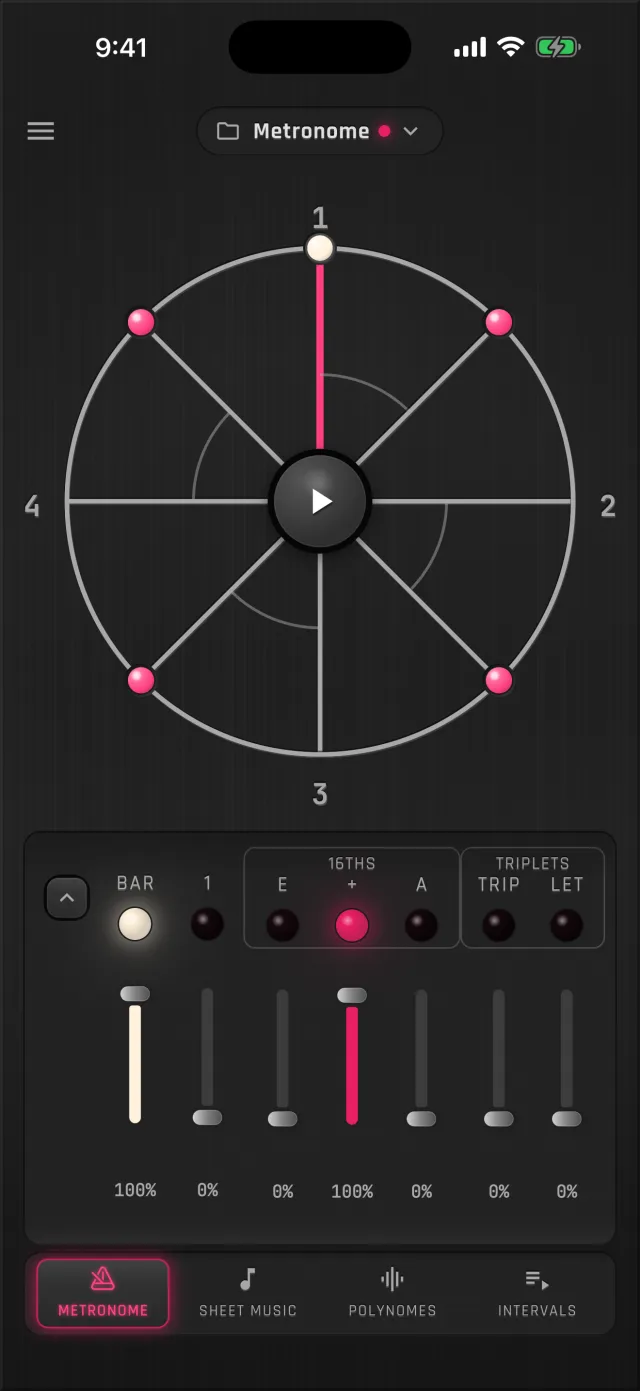
- Click on beats 2 and 4 only, like a drummer’s backbeat. You supply beats 1 and 3.
- Click on beat 1 only. You keep the whole bar steady yourself.
- Click on the off-beats. This makes it obvious if you are rushing or dragging.
Practice with gaps
Mute some of the beats and keep playing through the silence. When the click comes back, you find out immediately whether your time drifted. Start with one silent beat per bar and work up to whole stretches of silence.
Use subdivisions to check evenness
If your playing is uneven, turn on subdivisions (eighths, triplets or sixteenths). Hearing every small division of the beat shows exactly where notes are rushed, and is especially useful for slow tempos, where the space between clicks is long.
Keep sessions short and structured
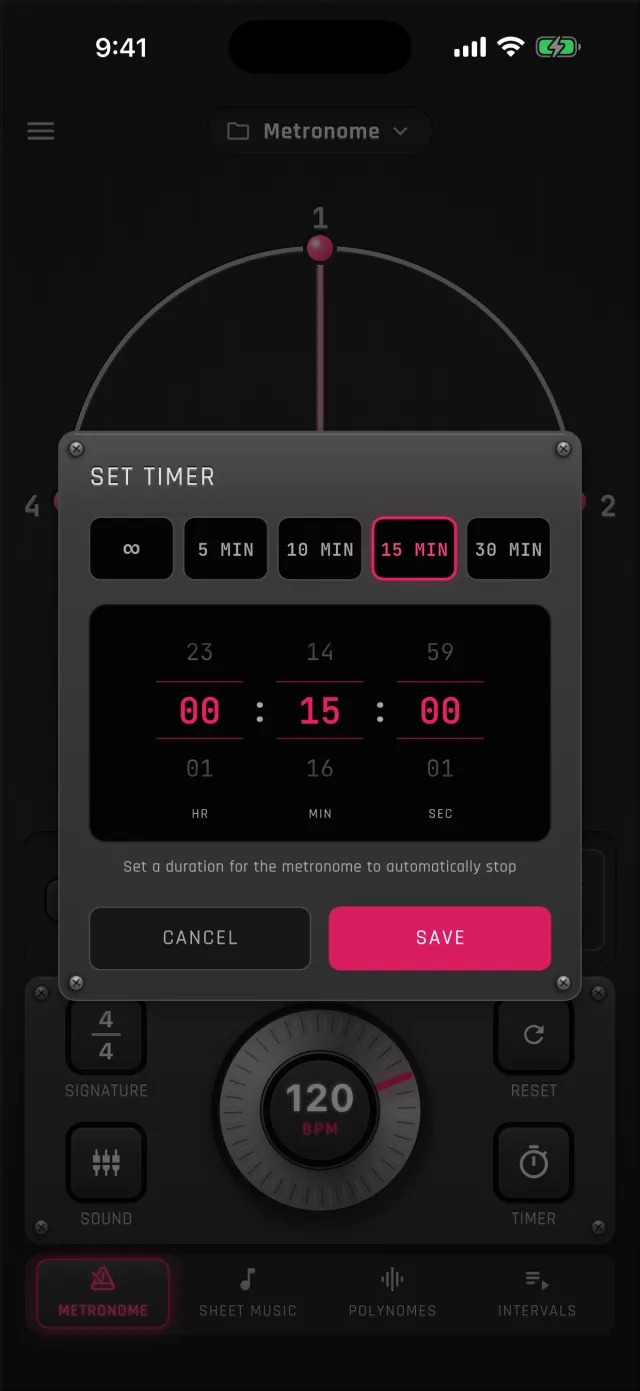
Twenty focused minutes with a plan beats an hour of playing through. A practice timer keeps you honest, and a routine that moves through your exercises with fixed tempos and rests saves you from fiddling with settings between them.
How MetronomeLab helps
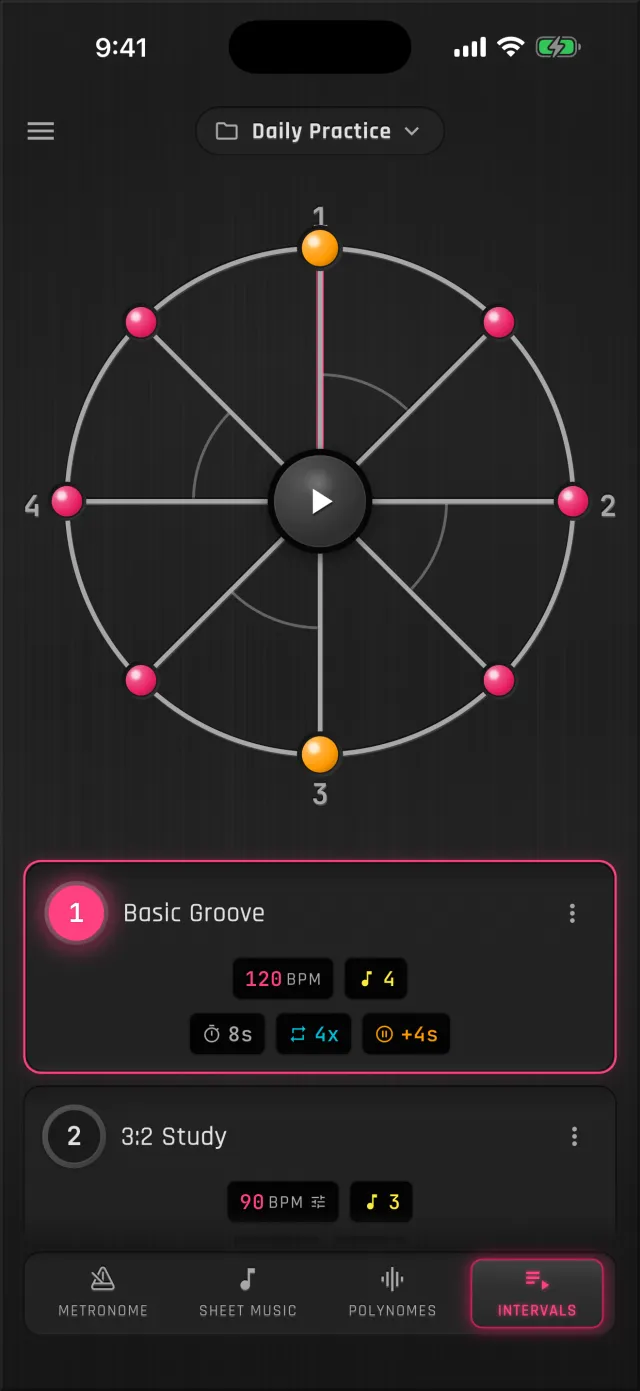
MetronomeLab lets you switch the bar click, the beat click and each subdivision on and off, so you can, for example, hear only the off-beats. You set the tempo by typing it, turning the knob or tapping along, and save your settings as presets. The Intervals tab builds whole routines with a tempo, number of loops and wait time for each exercise (up to three in the free version), and Pro adds a practice timer and count-ins. Because it shows the beat on a rotating circle, you can keep watching the time even when you have muted the click.
For rhythm-specific practice, see the guides on polyrhythms and visual metronomes.
Frequently asked questions
What tempo should I start at?
The fastest tempo at which you can play the passage cleanly several times in a row. For new material that is often far slower than you expect, sometimes half the target tempo.
How much should I raise the tempo each time?
Small steps of about 2-5 BPM work for most players. Bigger jumps tend to bring back the mistakes you just fixed.
Should I always practice with a metronome?
No. Use it to build and check your time, then play without it to see whether the timing holds. Alternating the two is more useful than either one alone.

